 UNVELL
Balloon Journey Japan Released — Two Controls, One Sky, and a Country That Keeps Going

UNVELL Inc. Releases "Balloon Journey Japan," a Hot Air Balloon Flight Simulator for iOS
— Burn to rise, vent to sink. The balloon keeps drifting across Japan while your phone is in your pocket —
September 11, 2026 — UNVELL Inc.
UNVELL Inc. is pleased to announce the release of "Balloon Journey Japan," a hot air balloon flight simulator for iOS, now available on the App Store.
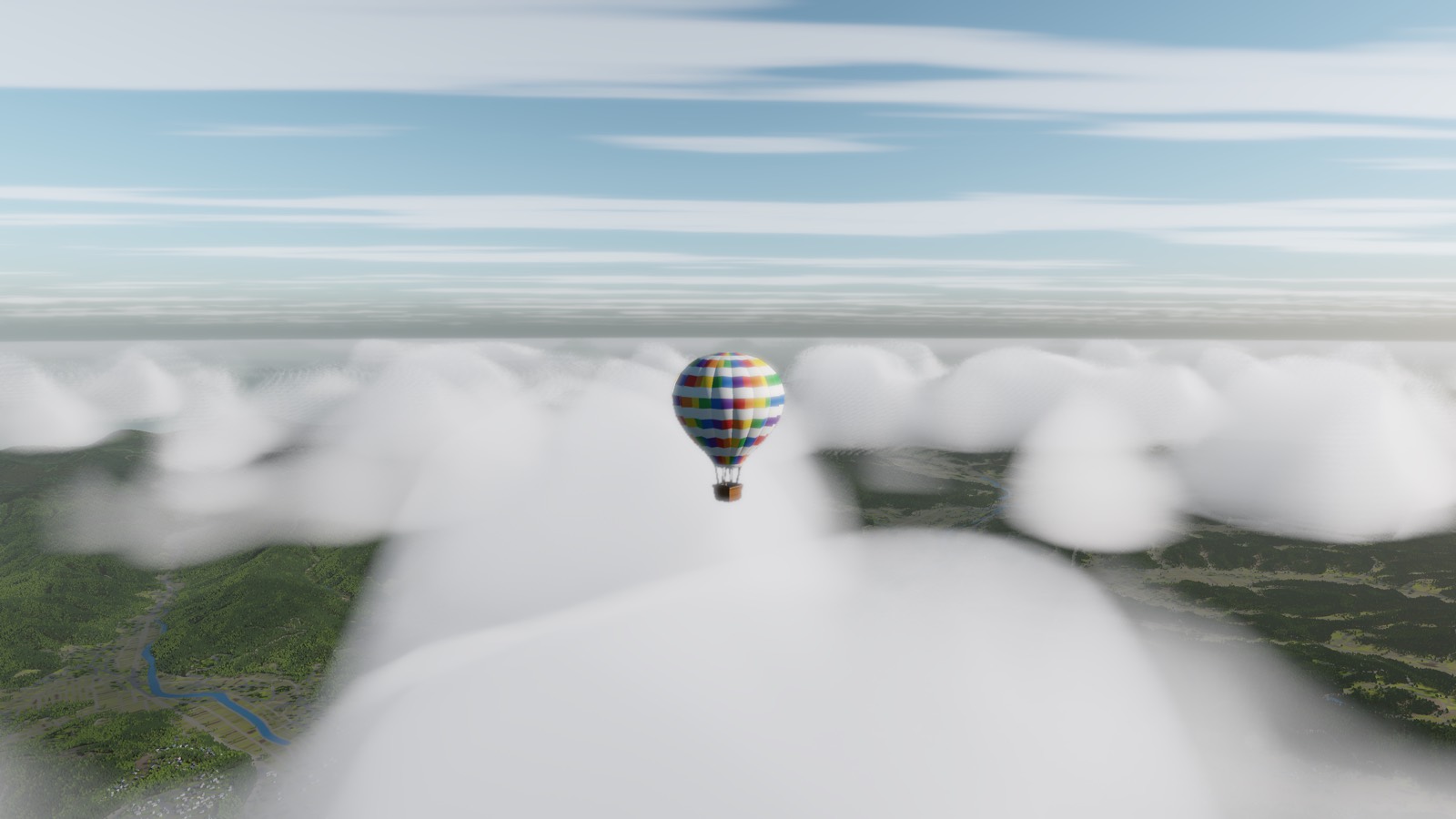
Balloon Journey Japan is about crossing the real Japan at full size, carried by the wind. It takes about a minute to learn. Burn to rise, vent to sink — those are the only controls, and the wind at the height you choose decides where you go.
Why We Built It
Games about flying have long assumed that the better you handle the aircraft, the further you get. Our own flight simulation "F-2 MISSIONS," released in August 2026, chases exactly that — the feel of handling a real jet.
A balloon works on a completely different principle. A real balloon pilot also has just two controls: burn and vent. What decides the course is the choice of which wind to ride. The wind at 300 metres and the wind at 2,000 metres rarely blow the same way, and finding the layer heading where you want to go is the whole of the craft.
Balloon Journey Japan turns that structure into the structure of the game. A child works it out in ten seconds, and then spends a year learning how to land on the mountain they picked. It moves at your pace — a sky you drift across slowly, for as long as you like.
The terrain, atmosphere, sky and ocean rendering built for F-2 MISSIONS carry over into a new C++20 / Vulkan engine, so the Japan below you is raised from real survey elevation data and flown at its true scale.
Key Features
1. Two controls, and height is the steering
There are two round buttons at the bottom right of the screen. Hold the burner and the balloon rises; hold the vent and it sinks. Let go, and it settles at the height it drifted to. Altitude is the result of holding and releasing, rather than a number you type in, and a balloon nobody is touching holds its height because that is simply what balloons do.
2. A forecast that comes true
The wind is generated from place and time, and your device and the server run exactly the same formula. What the wind sheet shows is therefore what will happen, rather than a probability. Read it correctly at dawn and you will be over the mountain you picked.
Below the sheet, the game flies a day ahead for you and reports back: "56 km east, Fujinomiya, if you leave it as it is." Then three cards with genuinely different destinations, each reachable in today's sky, each annotated with the move that gets you there — "burn, climb 600 m."
3. It keeps flying while the app is closed
The flight runs on the server, so the journey continues whether the app is open or closed. The best screen in this game arrives before you touch anything. Open it in the morning and the night plays back: the track drawn across the map, the ridge crossed at 3 a.m., and the few photographs the balloon took by itself while you were away.
Notifications stay quiet, and the ones that arrive carry good news only — a wind worth catching, a view coming up, someone waving.
4. Not stages, but one continuous Japan at full size
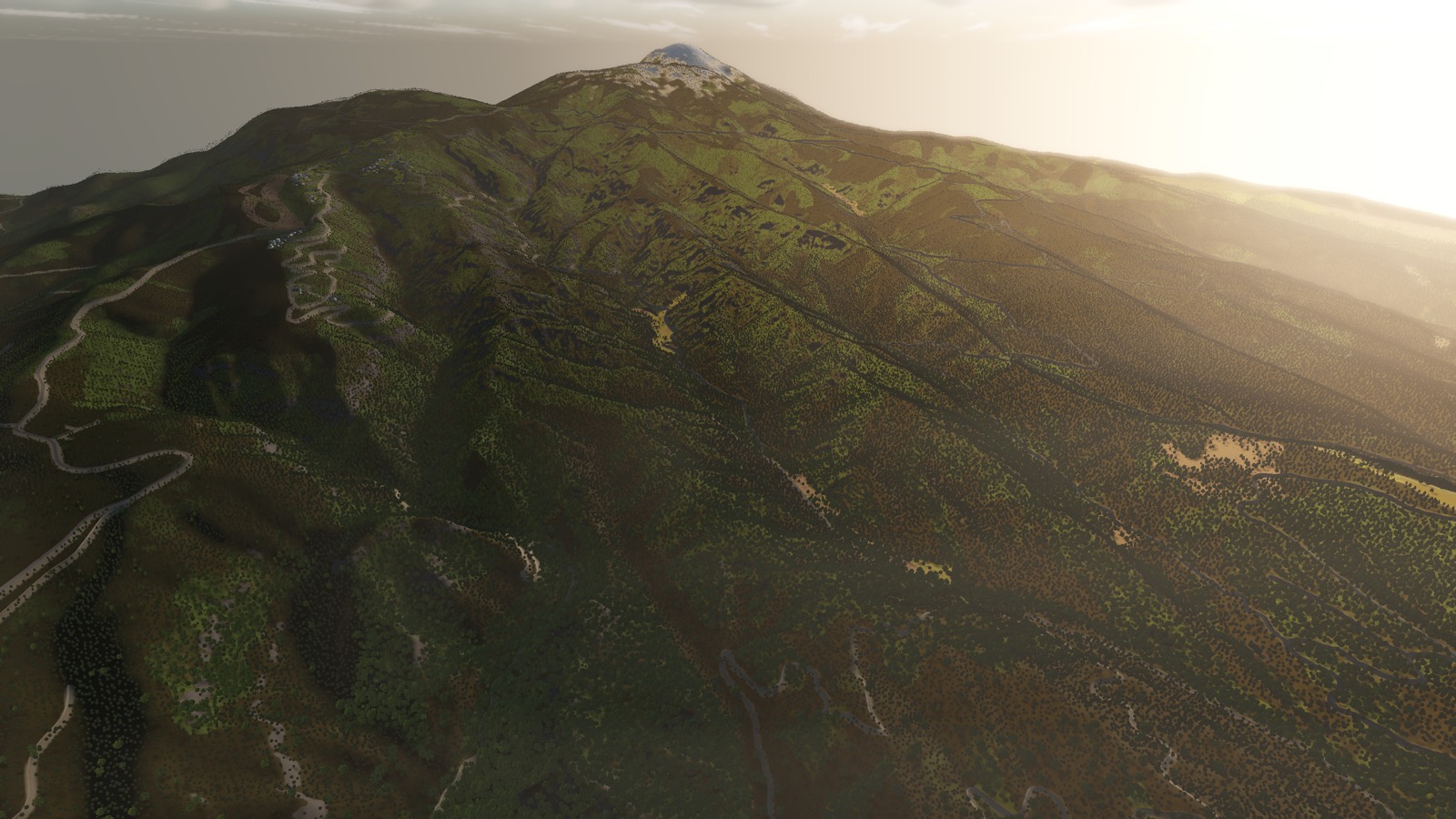
Everything above the horizon is a destination from the first minute. There is one Japan, continuous and at full size, with the ridges, valleys and coastlines you would see if you flew there tomorrow. Point at something and you can go there. Drift north for a week and you are simply that far north.
The patchwork below is divided the way the real one is: rice and orchards, a town where two valleys meet, a road running along a river because the valley has room for exactly one. Time and season come from the real calendar and the sky comes from a physical model, so any given view happens once. Dawn haze, a midday full of cumulus, a cloud sea holding the last light, the Milky Way over a sleeping town. On a rainy day, you fly through the rain.
5. Cruise at 20–40 km/h. An hour in the game is an hour of yours
The balloon moves at the speed a real one does. Tokyo to Osaka costs one to two days of your life. Fuel burns by the second you hold the burner, and the tank answers the question you actually have: how many hours can I leave this alone? Fly low and a full tank lasts close to a week; fly high where the fast layers are and it goes sooner. That is where the trade-off in choosing a height comes from.
Every time you open the app you are topped up a little, so opening it once a day keeps you flying indefinitely. Leave it a week and the balloon quietly descends, moors itself, and waits surrounded by fields until you refuel and lift off again. Landing is part of the journey, and the place the next flight begins.
6. Other players, riding the same wind
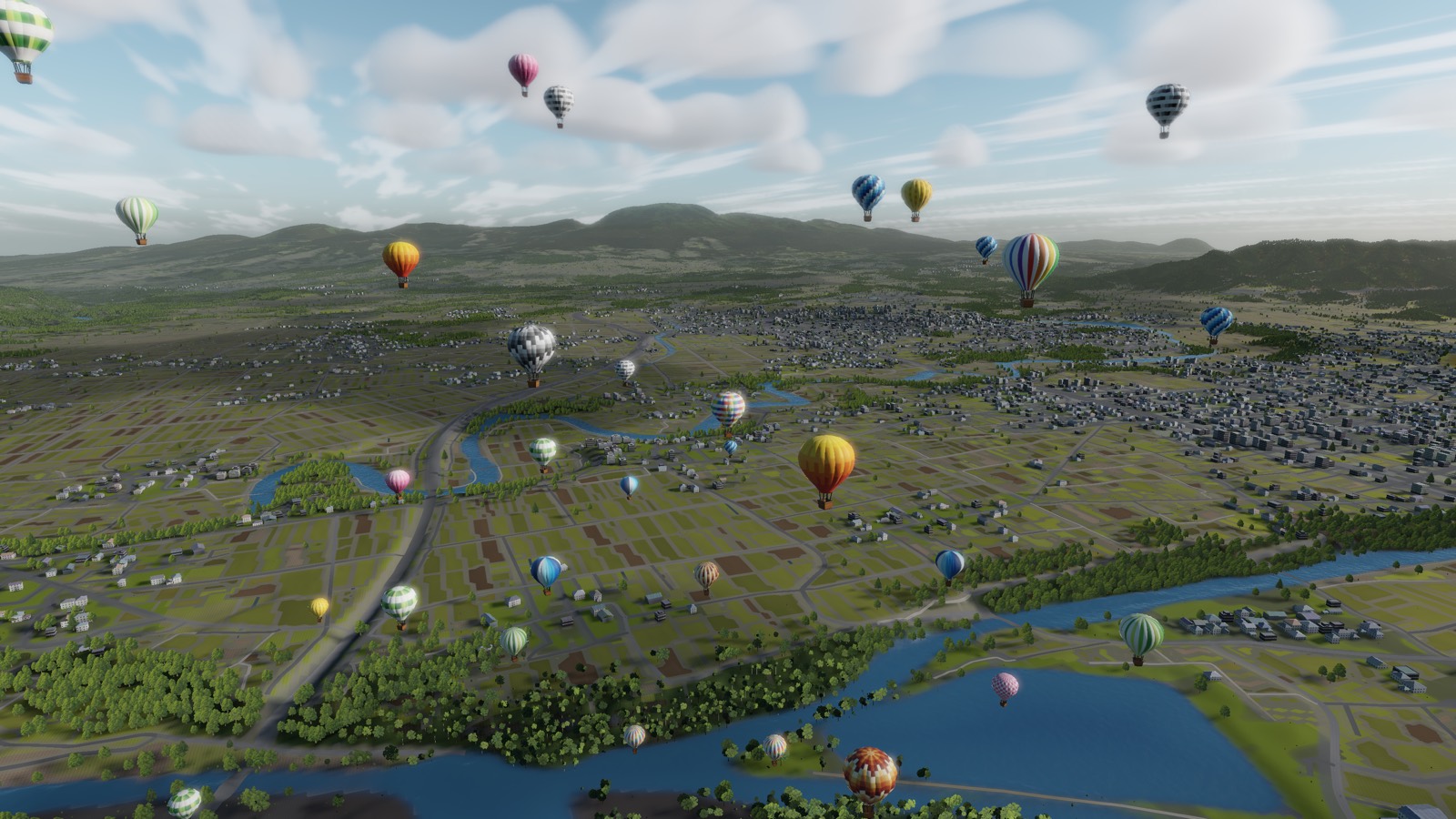
Other people's balloons are genuinely there, riding the same wind you are. Catch the same layer as a stranger and you may find you have travelled together all afternoon.
As the seasons turn, everyone gathers in the same places — north with the cherry blossom front in spring, above the fireworks in summer, onto the riverbed at dawn in autumn, where a hundred balloons rise at once.
You reach each other by waving, sending a set greeting, handing over a gift, and flashing the burner after dark. Gestures instead of words are exactly why this sky stays as quiet as it does.
7. What you collect is a map, not power
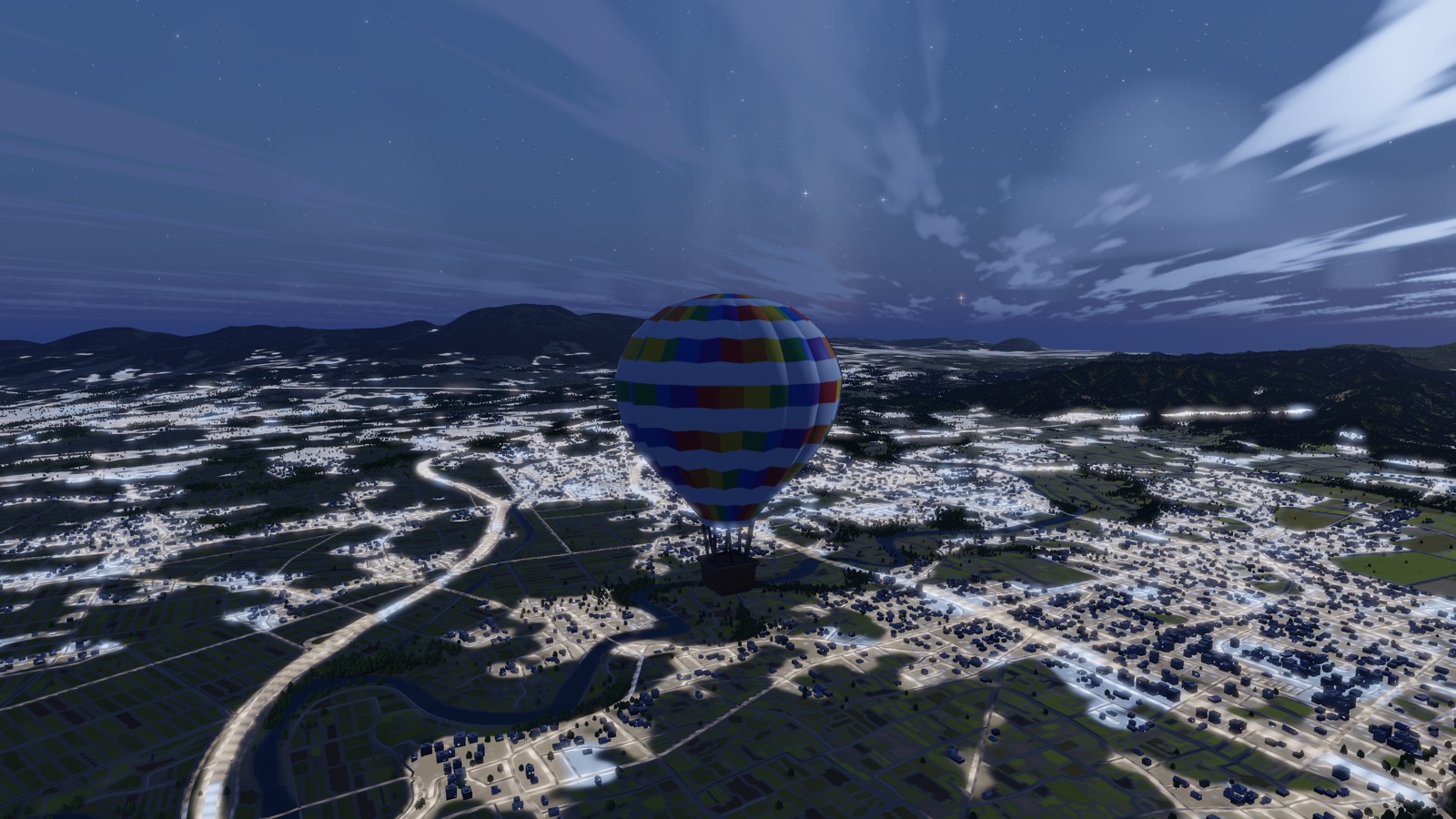
Prefectures crossed, famous peaks sighted, lakes, capes, the edges of your own range, seasons, distance flown. They accumulate while you sleep, and the ones still ahead of you are listed by name, so they double as your next destination.
Records are all that grows; the balloon's speed stays in the hands of the wind from beginning to end. The map becomes yours — that is how this game progresses. What you bring home is an album of the places you drifted past, rather than a score.
Who It's For
- Anyone looking for a quiet game that moves slowly through beautiful places
- Players who prefer to open an app for a few minutes a day and find it has moved on
- Anyone who wants to see Japan at its real scale, over its real terrain
- Anyone curious about balloons, weather, and reading the wind
Product Overview
| Item | Details |
|---|---|
| Product | Balloon Journey Japan |
| Genre | Hot air balloon flight simulator |
| Platform | iOS 16.0 or later (iPhone and iPad) |
| Languages | Japanese / English |
| Price | Free |
| Website | https://balloonjapan.com/ |
| App Store | https://apps.apple.com/app/balloon-journey-japan/id6802740313 |
| Developer | UNVELL Inc. |
Signing up means picking a name. The balloon is identified by a code created at first launch, and a short transfer code carries it to a new device.
What's Next
Android, Steam (Windows) and Nintendo Switch versions are planned.
Everything added from here is cosmetic — envelope patterns and shapes, basket designs, lights, flags, passengers, ornaments. Appearance is the only thing sold; wind, fuel, distance and time will stay free.
Download & More Info
Available for free download on the App Store.
- App Store: https://apps.apple.com/app/balloon-journey-japan/id6802740313
- Website: https://balloonjapan.com/
About UNVELL Inc.
UNVELL Inc. is a software development company guided by the principle "Keep Simple, Keep Smart." We develop and deliver software products for developers, creators, and business users — including the spreadsheet component "ReoGrid."
Company website: https://unvell.com
Contact
- UNVELL Inc.
- Email: [email protected]
- Web: https://balloonjapan.com/
Terrain is built from elevation data published by the Geospatial Information Authority of Japan (GSI). Buildings and roads: MLIT PLATEAU and OpenStreetMap contributors.